

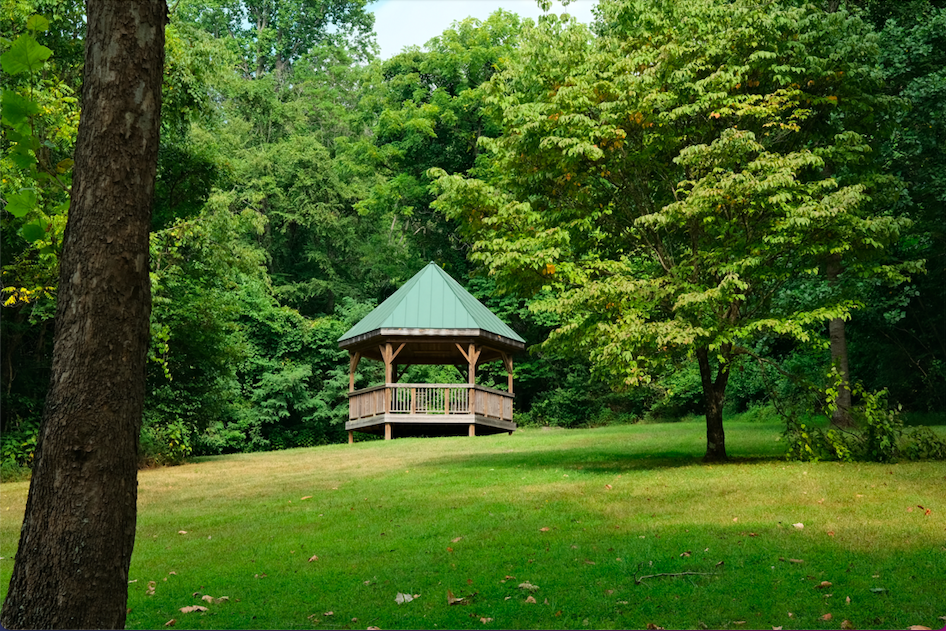
It has been six years this month since I looked at my husband and said the magical words, “let’s move back to Virginia.” The first year we lived here, I would walk outside and say it out loud, sometimes softly and sometimes beautifully loud. "I can’t believe we live here." For the first month or two, my husband and son smiled and rejoiced along with me. After that, the eye rolls got more pronounced. By the second year, I had stopped saying it out loud, but I still think it every day.
This past weekend my husband and I went for a walk in the woods.
Whenever I catch myself taking for granted the vast beauty we have the privilege of living in, I go there. At our Signature retreat, after we walk up to the gazebo, I ask our guests to listen quietly and take in the sounds. That moment means something bigger in the arc of the weekend, but this time I needed to calm my nervous system and find some peace. It continues to amaze me how calming and welcoming our forest is.
This land was tended with care long before we arrived. That is not always the case, and I know it. I have watched the reels and followed the stories of people who bought broken land and spent years healing it, building soil from scratch and coaxing life back into something depleted. I have profound respect for that work.
Our story is different. When we got here, the land was already alive and already generous, doing what land does when it has been respected. Our job was never to fix it. Our job was to be worthy of it.
That is a different kind of responsibility, and I am not sure it is any easier. When something needs healing, the path is clear. When something already extraordinary is placed in your care, the standard is harder to name and sometimes harder to meet. You are not building toward something. You are trying not to diminish what you were given, holding the standard and only adding improvements.
We farm surrounded by ancient forest. Not next to it. Surrounded by it. The forest does not belong to us, and we do not belong to it, but we live in a relationship with it that demands constant attention and respect. The predators are large and real. The small creatures, feathered, furred, and otherwise, are abundant and irreplaceable. What we have cultivated and what has always been wild live side by side here in a negotiated coexistence that I learn from every day.
The biodiversity the forest brings to this farm is both the greatest gift we have been given and one of our most serious responsibilities. The bees know it. The herbs know it. The soil knows it, in the way soil knows things, slowly and without announcement.
We came here because we needed a new way of life, and I knew this was home. Six years later, I know it still: these mountains were calling us, and we had to answer.
I cannot believe we live here.
I think it every day.
With love and respect,
Rachael Lieck Bryce